Math the blogs.
Math Kiid Podcast

Now you don't get to read my article only but also if you had wondered how my voice sounded or perhaps a case of life-inspiring messages curiosity that would improve and motivate you, you can now listen to our Podcast.
Live a different and better life in 2024 and years to come by making righteous decisions through the eternal perspective to be prosperous, bold, and confident. Start listening to the codes from our Podcast to get a clue about these codes of life.
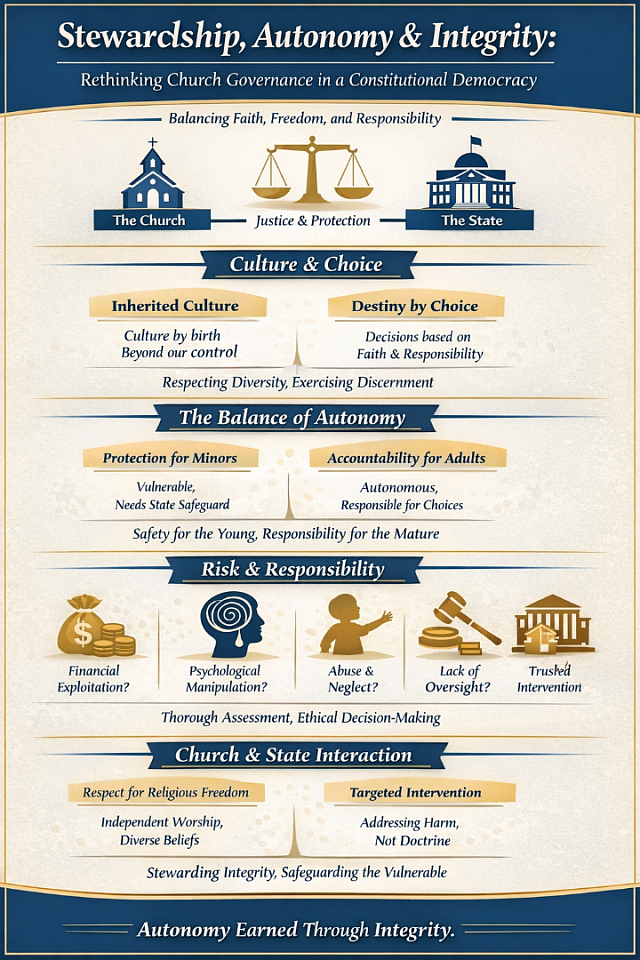
In a nation celebrated for its multicultural diversity, South Africa presents a unique challenge to religious life. The Church, while independent, exists within a complex societal framework where freedom, protection, and governance intersect. Recent interventions by the Commission for the Promotion and Protection of the Rights of Cultural, Religious and Linguistic Communities (CRL) under Section 22 have brought these tensions into sharp relief. These interventions are not arbitrary; they emerge from reports of potential harm, ranging from abuse of minors to patterns of exploitation that may affect adults. Yet, while protection is essential, the Church must retain its spiritual autonomy — for it is Christ, not any human institution, who governs the Body of believers.
The challenge lies in differentiating what is beyond our control from what falls under stewardship. Culture, inherited by birth, shapes our early context, yet it does not dictate destiny. The choices we make, the affiliations we embrace, and the commitments we accept are acts of moral agency. This principle becomes crucial when evaluating both church governance and personal responsibility. Adults, possessing legal and moral capacity, bear consequences for their decisions; minors, by contrast, require the utmost protection. Here, the law and theology converge: the state rightly intervenes to safeguard the vulnerable, yet it must tread carefully with the decisions of autonomous adults.
Decision-making within the Church demands sensitivity and informed pursuit. Leadership, members, and communities alike must weigh the potential consequences of actions — financial, psychological, and spiritual — through thorough reflection and research. Risk is not merely a practical consideration; it is an ethical and theological imperative. Churches that lack visible governance structures risk stagnation, exploitation, or collapse. Conversely, structures that are transparent, accountable, and biblically grounded empower the community, safeguard the vulnerable, and justify autonomy from external interference.
The intersection between Church and state is nuanced. The Church must govern itself, yet remain accountable to laws protecting human rights. The state may intervene in cases of criminal conduct or demonstrable harm, but it cannot license pastors, define doctrine, or dictate worship practices. Autonomy is justified not by insularity but by integrity. When governance is internal, visible, and ethically sound, the Church need not fear oversight; indeed, such maturity invites trust and respect.
Exceptional balance, as envisioned by the CRL, arises where the Church demonstrates proactive protection of the vulnerable, transparent financial and administrative governance, and ethical accountability for leaders. Intervention should focus on clear instances of harm, not generalized suspicion. The aim is not to standardize doctrine or suppress cultural diversity, but to ensure that multicultural expression does not permit neglect, abuse, or structural fragility.
Finally, it is critical to avoid overgeneralization. South African churches are immensely diverse — historic denominations, independent African churches, Pentecostal movements, house churches, and community ministries all exhibit different structures and levels of governance. To judge all by the failures of some is unjust. Yet, to ignore failures that place the vulnerable at risk is equally untenable. Stewardship calls for discernment: to affirm what is working, to correct what is failing, and to cultivate structures that make autonomy both sustainable and responsible.
In conclusion, the Church’s freedom is not an argument against oversight, nor is protection a license to constrain conscience. Stewardship in Christ demands internal integrity, vigilance over decisions and risks, and a balance that respects both the authority of God and the responsibilities of the state. In a multicultural democracy, the Church flourishes when it exercises accountability internally, safeguards the vulnerable, and affirms its autonomy. True independence is earned through integrity, not assumed; true protection honours both the law and the Headship of Christ.
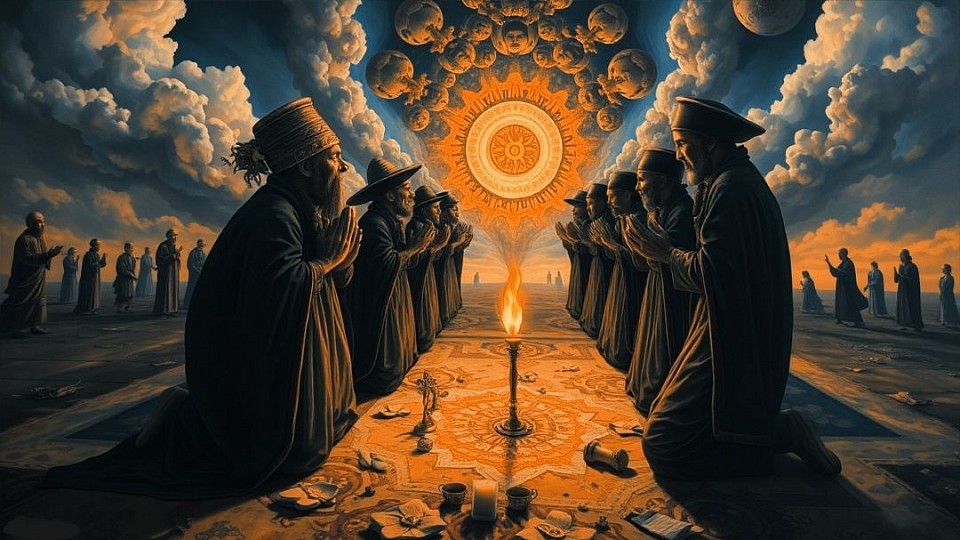
Between Dust and Divinity: Understanding the Tug Between Our Spiritual and Physical Natures
How the life and teachings of Jesus reveal the harmony between body and soul — and why both believers and skeptics should care.
The Great Inner Tug-of-War
If you’ve ever tried praying while hungry, you’ve probably felt the ancient tension between the spiritual and the physical. One part of you wants holiness; the other wants a cheeseburger. And in that instant, you realize the great mystery of being human — we are dust that dreams of eternity.
"Every person lives in two overlapping realities — the spiritual and the physical."
The physical nature is easy to identify: it eats, breathes, sleeps, and occasionally loses its keys. It’s the part that engages with the tangible world — our senses, instincts, and appetites.
The spiritual nature, however, is quieter. It’s the part that longs for meaning, beauty, and belonging. It asks inconvenient questions like “Why am I here?” and “What’s the point of all this?” It’s the whisper that tells us we are more than biology — that love, truth, and purpose have weight even when unseen.
- Two Lenses, One Mystery
For believers, the spiritual nature is the truer self — the part made in God’s image, designed for eternity. The physical body is temporary, a vessel through which we experience the world and express the divine within. This view brings direction and hope, seeing life as a preparation for something far greater.
Skeptics, meanwhile, may see spirituality as a beautiful illusion — a byproduct of consciousness that gives life meaning, but no evidence of the supernatural. To them, the soul is story, not substance.
And yet, both perspectives encounter the same ache — that longing for more. Even the most rational mind can’t fully explain the pull of love, the awe of a starry night, or the peace that passes understanding. These are clues, not proofs — but they point toward something, or Someone, beyond ourselves.
- Finding Balance
We often treat the spiritual and physical as rivals — as if one must defeat the other. But Jesus showed us something radical: they’re meant to be reconciled.
In Him, the divine put on flesh. Heaven touched earth. Spirit and body met — not in conflict, but in harmony. The message? Our physical existence isn’t a mistake to escape but a medium through which the spiritual can be expressed.
Ignore your body, and you risk becoming a ghost of good intentions. Ignore your spirit, and you risk becoming a well-fed cynic with an empty soul. True balance means recognizing that both belong to God — the same hands that shaped dust also breathed life into it.
The spiritual teaches us why to live; the physical shows us how. Together, they form a sacred partnership, the kind Jesus modeled in both prayer and practice.
- The Being of Human beings
Let’s be honest: we’re complicated creatures. We pray for peace, then snap at traffic. We seek God’s will, then argue with it. We promise to trust, then Google backup plans.
And yet, this is the beauty of the journey — God meets us in our contradictions. The spiritual nature calls us heavenward; the physical keeps us humble. Christ doesn’t condemn the struggle; He redeems it. Through Him, even our weaknesses can become places of grace.
- Bridging Belief and Doubt
Believers may find comfort in the unseen; skeptics may find confidence in the observable. But both, in their own way, are searching for truth.
The bridge between them is the doctrine of Jesus Christ — not as a wall of dogma, but as a living invitation. In Him, the spiritual and the physical meet perfectly: God taking on flesh, eternity stepping into time. His life and teachings reveal that faith and reason, heaven and earth, soul and body were never meant to be enemies but partners in redemption.
Even skeptics can appreciate the radical heart of this doctrine — that love is the highest truth, and humility bridges divides no argument can. Through Christ, the distance between dust and divinity is closed, not by force, but by grace.
- Living in Harmony
To be human is to inhabit both realms — dust and divine breath, reason and reverence, body and soul. Jesus embodied that unity perfectly, showing that the spiritual and physical are not rivals but reflections of the same Creator’s intent.
The spiritual nature gives depth to our days; the physical gives them color and texture. One without the other is an incomplete story.
So whether you bow your head in prayer or lift your eyes through a telescope, remember: both gestures point upward — and both find their answer in Him.
A Complete Sense Of Sacredness.
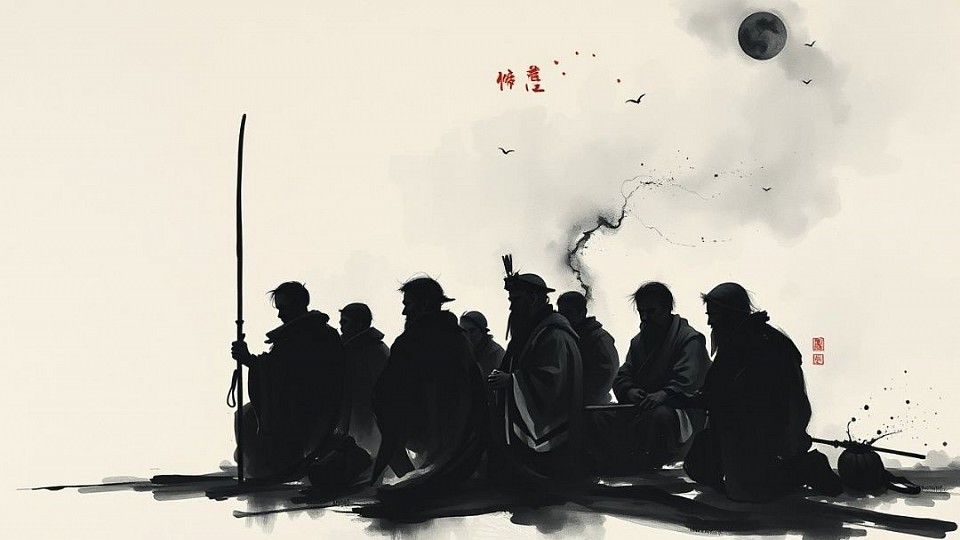
A Complete Sense of Sacredness
By Math Kiid Photography® (MKP®)
We Are Not of This World
We are foreigners here.
Not homeless — but sent.
Sent from a place of abundance to restore sacredness where it has been forgotten.
At Math Kiid Photography®, a Complete Sense of Sacredness is not a slogan. It is a way of seeing, living, and responding to life with intention. Sacredness is not accidental — it is perceived, protected, and practiced.
Holy vs Whole: Understanding the Difference
There is a difference between being holy and being whole.
They sound the same, but they are not the same.
A loaf of bread is whole until it is sliced to meet an immediate need. It feeds hunger quickly, but it loses longevity. This mirrors modern life — repetitive cycles of survival rather than lasting fulfillment.
Holy, however, speaks of sacredness — alignment with God, purpose, and eternity.
To perceive this difference requires attentiveness. Listening deeply. This is where Perceiving Mathematica begins — discerning meaning beneath what is merely functional.
The Danger of a Compromised Life
Anything less than sacredness leaves room for compromise.
Busyness without reflection breeds chaos. When we never isolate ourselves to regain clarity, we mistake noise for life and confusion for progress. Ignorance is not bliss — it is drift.
Sacredness demands pause, intention, and surrender.
The Bread of Life
Each day, we are offered bread — not the kind that perishes, but the Bread of Life.
The Word of God sustains where productivity fails. It corrects perspective, restores identity, and renews purpose. This is not theory — it is lived truth.
I was once consumed by the world. Lost, overwhelmed, convinced I was never enough. Until obedience replaced resistance. Until surrender produced breakthrough.
Sacredness did not arrive overnight — it was learned through instruction, patience, and faith.
Encounter, Alignment, and Testimony
God aligns His people intentionally.
Through obedience, I encountered leaders and moments I never imagined — including Pastor Speedy Kisten & The Gateway Church Family, Durban. These encounters were not coincidence; they were confirmation of God’s ongoing work.
Sacredness attracts alignment.
Why Sacredness Changes Everything
Sacredness is not religious performance.
It is intimacy with God.
Like operating a complex machine without reading the manual, life breaks down when lived without the Word. The Bible is not outdated — it is instructional, corrective, and alive.
To live without it is to walk veiled.
To live by it is to see clearly.
Perceiving Beyond Circumstances
Even irritation carries purpose.
Wind may sting the eyes, yet it carries seeds. In discomfort, God is still at work. When perception shifts, frustration becomes revelation.
This is sacred awareness.
Choosing Depth Over Shallow Living
Depth produces fruit.
Those who go deeper grow stronger roots. Faith is not shallow motivation — it is disciplined pursuit. Theory precedes practice. Revelation precedes manifestation.
Life is found in the Word of God.
A Complete Sense of Sacredness
Sacredness is not confinement — it is freedom.
When surrendered fully, fear loses authority, confusion dissolves, and purpose becomes clear. This is not hype. This is testimony.
Choose life. Choose depth. Choose sacredness.
Perception first. Obedience always.
Math the Biblical Combatant.
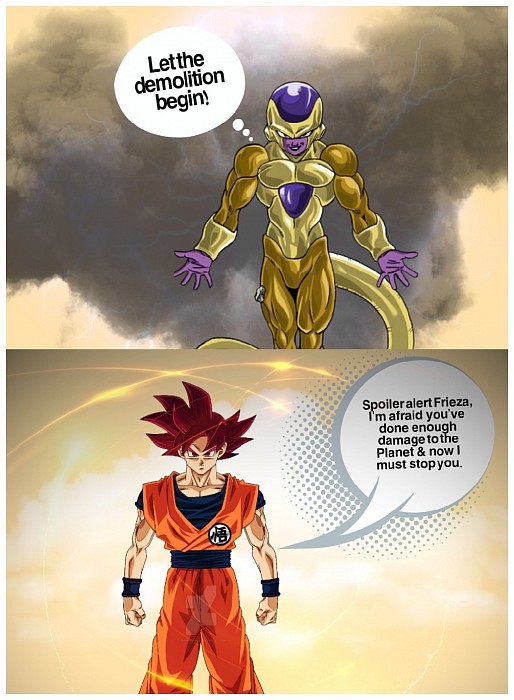
The Power of Preservation: A Reflection on Goku and the Divine
The Nostalgia of the 17:00 Hour
Between 2003 and 2006, my neighborhood stood still at 5:00 PM. As a kid, I was glued to the screen, captivated by action-packed stories that stayed with me long after I finished high school. Back then, it was all about the adrenaline and the fights; we’d get frustrated by every commercial break that interrupted the heat of the moment. It felt like it all happened just a few months ago.
However, as I’ve grown into my own creative process, I’ve realized these cartoons weren't just about flashy battles. There is a deep, spiritual message hidden within these characters—one I’ve captured in my latest illustration.
The Ultimate Transformation: Golden Frieza vs. Goku
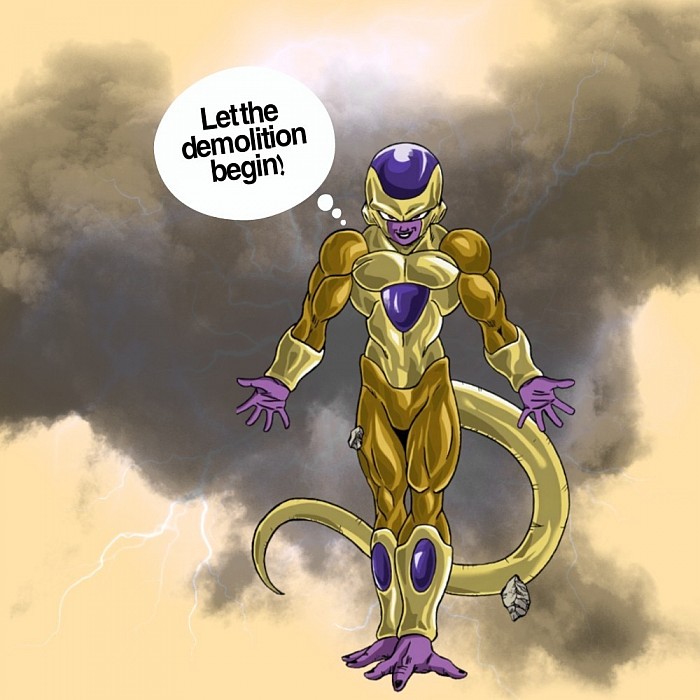
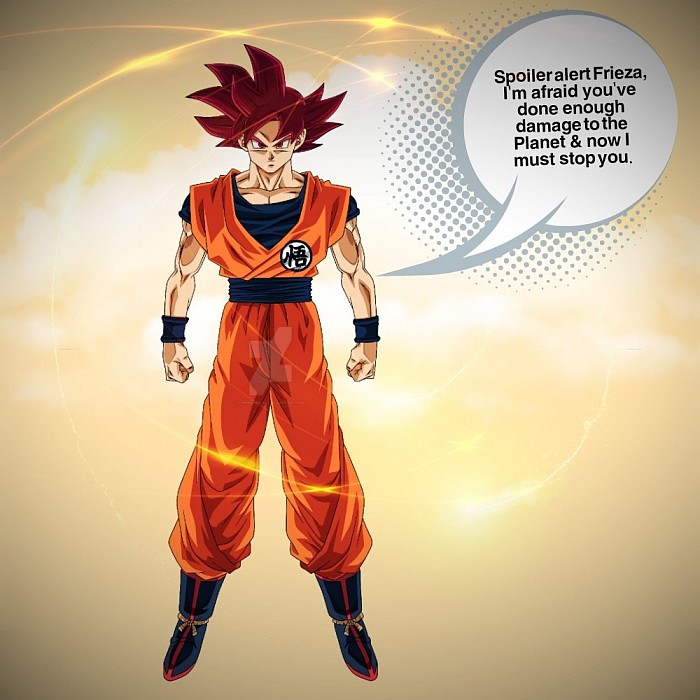
The layout above depicts a power level that exceeds our world—a strength capable of destroying planets with minimal effort.
- Golden Frieza: He represents the ultimate destroyer. He aims to wipe out the Earth and its guardians, leaving nothing behind but himself. In a spiritual sense, he is the embodiment of rebellion against creation—the "child of Satan" who seeks demolition.
- Goku (The Saiyan God): He is the protector. Through vigorous discipline and God-level martial arts training, he stands as the "guardian angel." He doesn't just fight for himself; he fights to preserve life.
The Spiritual Perspective: Protection vs. Destruction
This eternal battle is a perfect example of the struggle between the demonic and the divine. When someone is determined to destroy—whether it’s breaking a heart, hurting themselves, or harming the world—they are out of alignment with the Creator.
God’s intention is to preserve His creation. Frieza is blinded by his own power, thinking he can do as he pleases. But as we see in the story, Goku is ultimately victorious because he aligns with the protective nature of the Divine. You cannot escape creation unless you are the Creator yourself—and since we aren't, going against His word only leads to consequences.
Finding Your "God-Level" Training
If you find yourself following a path of destruction or rebellion, it’s time for some deep introspection. Being in par with Christ is the key to a happy life. You don’t have to be a martial artist to be like Goku; you just have to serve and protect by training excessively to reach a "God-level" in your own field.
There is a reward for every good deed. Think about the unconditional love God showed by sacrificing His only Son for our sins. While my parents have shared a love that feels similar, nothing compares to His. He loves you for who you are, and He has your back.
The Lesson: Don't be lead astray by the illusion of power. Be like Goku: train hard, protect what is good, and stay righteous.
Take a deep breath and exhale. If you are looking for answers, they all end with Christ.
Math the Love...xxx
or
Math the Biblical...
Check out more of my cool creations on this link below...I hope you love them, share a heart in the end of the page.
Remember: The light is within you when the vital moment strikes. Stay focused and Math the discipline.
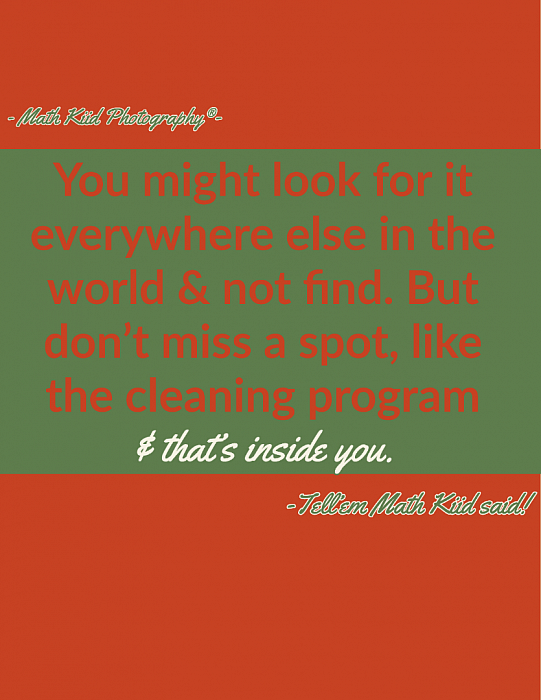
The Heroism of Discipline: Finding the Light in the Storm
The Perspective of the Storm
When you are in the midst of a storm, feeling hopeless, it is incredibly difficult to see the light at the end of the tunnel. It can feel as though the entire world is against you. But I want you to know: there is still hope. We often have to endure these seasons of darkness to truly appreciate the light. No matter how insurmountable your situation feels, remember that this too shall pass. Better days are not just a possibility—they are ahead of them.
The Logic of Choice
The power to change your story lies in your hands. Ending your life is an act of ultimate selfishness; it is a permanent solution to a temporary storm. Instead, I challenge you to dig deep into your discipline. Choosing to stay, to fight, and to endure makes you heroic. If you are critically analytical about your struggle, you might find "jewels" hidden in the pain—lessons and strengths you never knew you had. One day, you will look back and likely laugh, realizing that the "logic" of staying was right all along.
Returning to Our Roots
We were all taught the basic disciplines of life as children. They were taught for a reason, but as humans, it is in our nature to forget. I am sharing this perspective to refresh your mind and remind you to humble yourself.
My conviction comes from a simple instance in my own life that made a massive impact. I discovered that willingness—the sheer choice to try—holds immense power in both logic and practical experimentation.
A Calculated Thought for the Hurting
The number of suicides occurring every year is a tragedy that none of us should accept. If you know someone struggling, share this with them. Give them a "calculated thought" that will stick in their minds: Your situation is variable, but your life is invaluable. Our circumstances vary, but the power of the human spirit to overcome remains constant. Take a deep breath, lean into your discipline, and choose to stay.
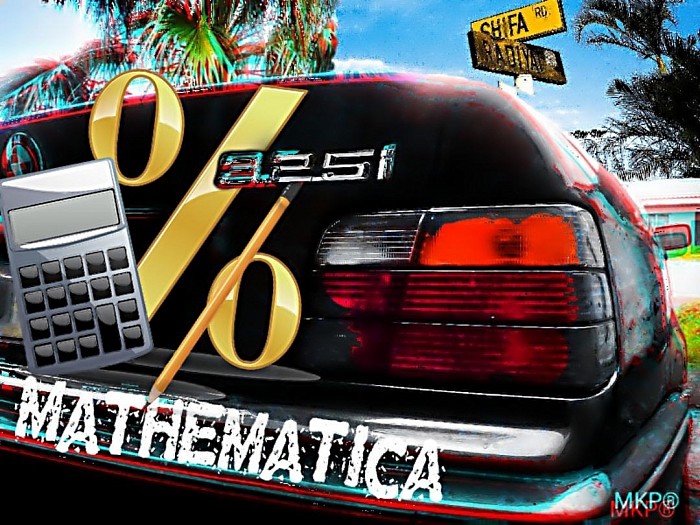
The Calculated Narrative: Why Our Story Resonates with Our Portrayal.
Percepting Mathematica: The Calculated Art of Math Kiid Photography
The Mission Behind the Stories
At Math Kiid Photography, we believe blogging is crucial. It is more than just sharing images; it is about laying out stories that raise awareness about our existence and sharing "interesting reads" that truly connect with our audience. Through these stories, we aim to align you with our field of interest and show you what it truly means to be Percepting Mathematica.
Precision Over Correction
A "calculated move" is the bottom line of our mission. In our photography and our storytelling, we strive for righteous, corresponding achievements. There is something life-changing and deeply motivational about doing things right the first time. Instead of shooting blindly and rectifying results later, we work with the mindset of an expert: we calculate, we execute, and we know exactly what to expect. This is the foundation upon which this brand is built.
The Science of the Shot: Daylight Calculation
The video below illustrates the significance of using specific calculations to achieve a correctly exposed photograph in normal daylight. This mathematical approach is not just theory; it has been put into practice countless times to ensure perfect results under any light incidence.
This level of technical discipline is exactly what Math Kiid Photography delivers. Whether the light is harsh or subtle, our process remains calculated and consistent.
Why We Are Percepting Mathematica
This intersection of logic, discipline, and art is why our clients can rely on us for exceptional photography. We don’t just capture a moment; we calculate the beauty within it.
This is why we are Percepting Mathematica.